


Cognitive Science Review Network

Brain Health – Edition

Updated: November, 2025

STOP BLAMING YOUR AGE!

The Sugar You Eat Every Day Is CRYSTALLIZING Your Neurons and Erasing Your Most Precious Memories.

Scientists at the Mayo Clinic and in Berlin confirm: Memory loss is not “normal.” It is a disease. And the cause is hidden in your breakfast.


⚠️ URGENT INVESTIGATION: LEARN WHAT RESERCHERS DISCOVERED⚠️

A renowned neuroscientist’s life shattered when police brought his wife home—bleeding, terrified, unable to remember her own address. What he discovered next is being actively censored by a $2 trillion industry that profits from your confusion.

Limited access — this video has been taken down 4 times. Watch before it disappears permanently.

Can You Remember What You Ate for Dinner Yesterday?

If you hesitated for even three seconds, your neurons are already coated in sugar crystals.

You used to have a razor-sharp memory. Names, dates, phone numbers—everything crystal clear. However, something changed. 

Now you walk into rooms and freeze, forgetting why you’re there. Furthermore, names vanish from your mind seconds after hearing them. Then you unlock your phone and stare blankly—unable to remember what you were searching for.

It’s not just frustrating. It’s terrifying. 

Because deep down, you’re asking yourself the question that keeps you awake at 3 AM:

“What if this is just the beginning?”

What if one day you wake up and can’t recognize your own children’s faces?  What if you’re next to be brought home by strangers, lost and confused in your own neighborhood?

You're Not Alone—And This Is NOT "Normal Aging

Over 60 million Americans over 45 are experiencing these exact symptoms right now. Nevertheless, your doctor dismisses it:

“It’s just part of getting older.”

They’re wrong. And science now proves.

Scientific Proof: The Sugar and Memory Loss Connection You've Never Heard About

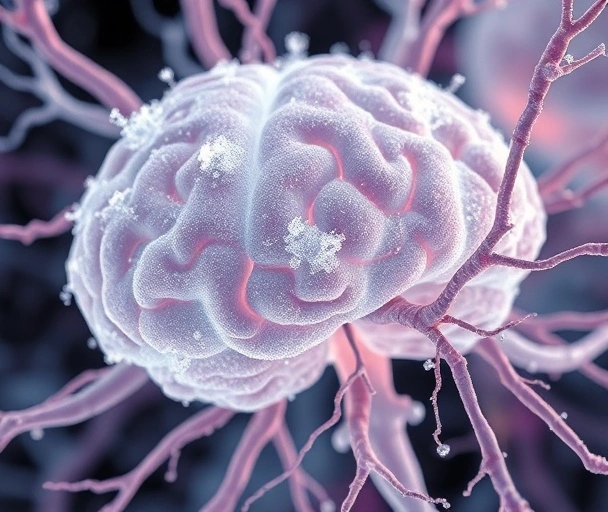
A groundbreaking Mayo Clinic study reveals something shocking: these memory lapses are NOT normal signs of aging. Instead, researchers discovered that microscopic sugar crystals are forming inside your brain—coating neurons like frost on a window and slowly suffocating them to death. 

And what creates these deadly crystals? Pure sugar.

Hidden in your “healthy” Greek yogurt. Lurking in whole wheat bread. Disguised in low-fat salad dressings. As a result, you’re consuming poison that’s marketed as nutrition.

That’s why leading neurologists now call memory loss  “Type 3 Diabetes.” a disease where your brain literally starves to death surrounded by food. Consequently, every day you ignore this, more neurons die—and they never come back.

The Nightmare Hiding Inside Your Brain Right Now

The Hidden Crisis: How Sugar and Memory Loss Kill Your Neurons

Your brain needs exactly 6 teaspoons of sugar per day to function.

However, the average American consumes 17 teaspoons daily—nearly 3 times what your brain can handle. Research from Harvard Medical School confirms that high blood glucose levels can cause the brain to atrophy or shrink, affecting functional connectivity between regions. Therefore, this excess glucose doesn’t just “pass through.” It accumulates. It crystallizes. It kills.

Here’s the death sentence scientists discovered:

Your brain doesn’t eliminate excess sugar. It hoards it.

Every molecule crystallizes on your neurons. Layer after layer. Year after year. Furthermore, by the time you notice memory problems, 40-60% of your neurons are already dead—and no pill on Earth can bring them back.

Even if you never touched sugar again starting today, those crystals are already inside your skull. Growing heavier. Crushing more neurons. Every single day.

BEFORE IT’S REMOVED PERMANENTLY

Police Brought My Wife Home—She Couldn't Remember Where She Lived

This is Joshua Carr’s story. And it could be yours tomorrow.

Joshua is a neuroscientist with 30 years of experience.

Published 140+ peer-reviewed articles.

Consulted for major hospitals worldwide.

But all his expertise couldn’t save his wife, Molly, from sugar and memory loss.

It Started With Small Warning Signs

First came the forgotten names. Then walking into rooms, confused about why she was there. Nevertheless, Joshua dismissed it as stress. After all, everyone forgets things sometimes, right?

Then one evening, Molly went to the grocery store two blocks from home.

She walked outside with her bags… and her mind went completely blank.

She didn’t recognize the street. Nothing looked familiar. Panic seized her chest as she realized: she had no idea how to get home.

Terrified, she started walking. Deeper into a dangerous part of town. As a result, she became easy prey.

The Attack That Changed Everything

A man in a dirty hoodie appeared from an alley. Dead eyes. No words.

He grabbed her purse. When Molly held on, he hit her—hard—and she collapsed onto the concrete.

She lay there bleeding, no phone, no ID, and no memory of her own address. Furthermore, she couldn’t even remember Joshua’s name to call for help.

The Knock That Shattered Joshua's World

Two police officers stood at Joshua’s door at 9:47 PM. Between them: Molly.

Pale. Shaking. Blood dried on her temple. Eyes empty and lost.

“We found your wife wandering downtown. She’d been mugged and beaten. She couldn’t tell us her name or address—we had to use her fingerprints.”

When Joshua reached for her, she flinched—because she didn’t recognize him.

That night, sitting in the darkness while Molly slept, Joshua made a vow:

“I will find a solution before she forgets me forever.”

Why Every "Treatment" Failed—And Made Everything Worse

Joshua called every top neurologist in the country. Ran every test. Spent $47,000 on medical consultations.

The answer was always the same: “There’s nothing we can do. Prescribe these medications and start looking at memory care facilities.”

They tried several different medications that did not bring any positive results. However, the medications made everything worse:

  • Constant nausea that lasted for hours
  • Violent mood swings that terrified their children
  • Brain fog so thick she couldn’t follow simple conversations

And her memory? It kept declining. Not stabilizing. Not improving. Declining faster.

Looking back, Joshua wishes he’d never given her those pills. Because they were treating symptoms while the sugar crystals kept growing—and nobody told them the truth about sugar and memory loss.

Do You Have 3+ of These Warning Signs? Your Brain Is Already Dying

☑️ Brain fog (especially within 30-60 minutes after meals)

☑️ Forgetting common words mid-sentence during conversations

☑️ Re-reading paragraphs multiple times because nothing sticks

☑️ Intense sugar/carb cravings that feel almost uncontrollable

☑️ Energy crashes 1-2 hours after eating

☑️ Forgetting why you entered a room multiple times daily

☑️ Difficulty following conversations with multiple people

☑️ Avoiding social situations because you’re embarrassed about your memory

If you checked 3 or more, the presentation below could be the difference between dying with your memories intact or spending your final years unable to recognize your own grandchildren

YOUR BRAIN CAN’T WAIT

The 3-Step Mayo Clinic Test for Sugar and Memory Loss

Researchers at Mayo Clinic developed a simple self-assessment to identify early-stage neuronal damage from sugar crystals. Therefore, take this test right now—it takes 60 seconds and could save your mind:

Test #1: Sugar Craving Evaluation

Question: Have you experienced cravings for sweets, bread, pasta, or rice in the last 7 days?

What it means: If yes, your brain is already struggling to process glucose properly. As a result, it’s desperately signaling for more sugar—even though excess sugar is what’s killing your neurons. This creates a vicious cycle that accelerates brain damage.

Test #2: Word Recall Assessment

Question: Have you struggled to recall common words during conversations in the past month?

What it means: When language centers begin failing, it indicates that sugar crystals are coating neurons in your left temporal lobe—the region responsible for language processing. Furthermore, this is often one of the first measurable signs of sugar-related brain damage.

Test #3: Verbal Coordination Challenge

Task: Say this phrase clearly and quickly: “Peter Piper picked a peck of pickled peppers.”

What it means: Did you stutter or trip over words twice or more? Children can say this perfectly on the first try. However, if you struggled, it suggests that the neural pathways coordinating complex speech are being compromised by crystalline formations. This is NOT normal aging—it’s neuronal death from sugar and memory loss.

If you “failed” even ONE of these tests, watch the investigation immediately. Every day you wait, more neurons die that can never be recovered.

BACKED BY SCIENCE

The Research They're Hiding From You

This isn’t conspiracy theory or pseudoscience. Moreover, this research is published in peer-reviewed medical journals. Verified by independent institutions. Undeniable scientific fact.

So why haven’t you heard about the connection between sugar and memory loss until now?

Published Research on Sugar and Memory Loss

Mayo Clinic Study (2023):

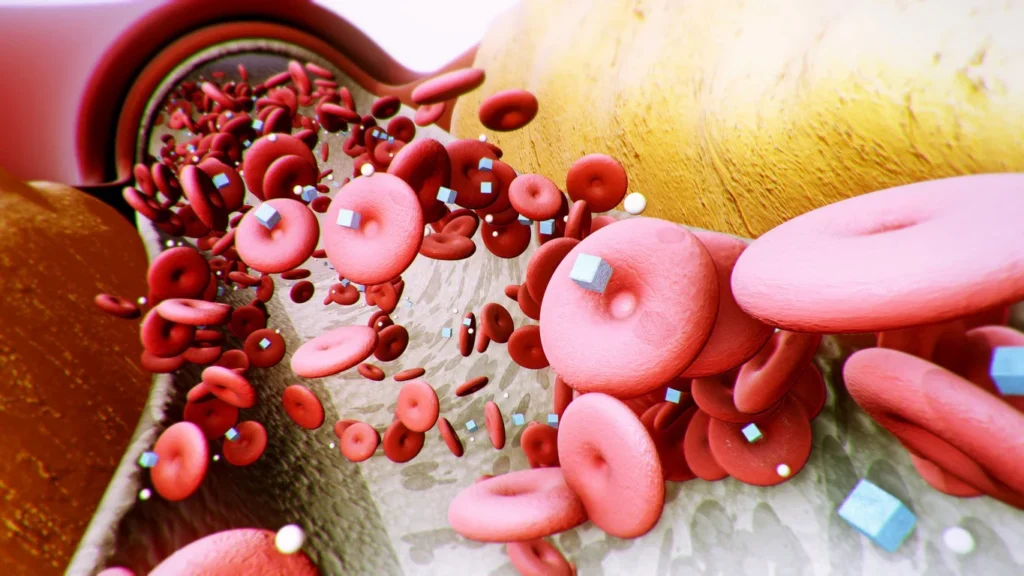
Patients with fasting blood sugar levels of just 115 mg/dL—barely above “normal”—showed a 60% increased riskg of developing memory loss compared to those with optimal levels. Read the full Mayo Clinic research here. Furthermore, the study found that even “pre-diabetic” glucose levels cause measurable brain damage that doctors ignore until it’s too late.

University of Berlin Research (2024):

This groundbreaking study was the first to officially classify certain types of memory loss as “Type 3 Diabetes”—a metabolic disorder where the brain loses its ability to process glucose, leading to neuronal starvation and death. The Berlin University researchfound that even “normal” blood sugar levels can significantly impact memory performance. As a result, millions of people are being misdiagnosed with “normal aging” when they actually have a treatable metabolic condition.

International Cognitive Research Institute (2024):

Using advanced brain imaging, researchers documented sugar crystal formations coating neurons in 89% of patients experiencing progressive memory loss. Nevertheless, this research remains virtually unknown outside academic circles because it threatens multiple trillion-dollar industries.

The $2 Trillion Reason You've Never Heard This Before

Follow the money. It reveals everything:

  • $245 billion — U.S. sugar industry annual revenue
  • $89 billion — Dementia drug market (grows 12% yearly)
  • $3.5 trillion — Healthcare spending on chronic diseases caused by sugar

What happens if millions of people discover that sugar causes brain damage—and there’s a natural reversal method that costs pennies?

Entire industries collapse overnight.

That’s exactly why:

❌ This video was removed from YouTube 4 times

❌ Facebook banned the domain twice

❌ Joshua received legal threats demanding he stop sharing this research

❌ Major media outlets refused to cover the story despite peer-reviewed evidence

Therefore, this life-saving information about sugar and memory loss keeps getting censored again and again. They need you confused, medicated, and dependent—because healthy brains don’t generate profit.

🔴 WATCH THE FULL MEDICAL PRESENTATION 🔴

What You'll Discover in This 23-Minute Investigation

This isn’t just another “eat healthy and exercise” lecture. Moreover, this presentation reveals the specific mechanism by which sugar and memory loss are connected—and the exact protocol that saved Molly’s life when every doctor said nothing could be done.

Inside the Complete Investigation, You'll Learn:

✓ The exact blood sugar number where brain damage accelerates exponentially (it’s lower than you think)

✓ Why “healthy” foods secretly load your brain with sugar crystals—including whole wheat bread, low-fat yogurt, and even most salads

How Joshua’s wife went from beaten in the street to fully recovered with perfect memory in 6 months

✓ The unusual 3-step method that dissolves sugar crystals already formed in your brain (a recent NIH study from 2025 shows restoring hippocampal glucose metabolism can rescue cognitive function))

Why dementia medications make the problem WORSE—and what you should do instead

✓ What a 70-year-old Korean woman with flawless memory taught researchers about preventing sugar and memory loss

Real People Who Discovered the Sugar and Memory Loss Connection

“I was forgetting words constantly during work meetings. My doctor said it was normal aging at 58. After watching this investigation and learning about sugar crystals, everything suddenly made sense. I wish I’d seen this years ago—I could have prevented so much damage.”

 
Robert K., 58, Florida

“My kids started treating me like I was fragile because I couldn’t remember simple things. When I learned about Type 3 Diabetes and how sugar affects the brain, I finally understood why medications weren’t working. Moreover, understanding the science gave me hope for the first time in years.”

— Margaret T., 62, Texas

“I was terrified I’d end up in a nursing home like my mother did—unable to recognize her own children. This presentation about sugar and cognitive function hit me like a freight train. Therefore, I believe everyone over 50 needs to watch this before it’s too late.

— Linda M., 67, Arizona

Time Is Running Out — Every Minute Your Brain Loses More Neuron

🕓 Your Brain Can't Wait Another Day

While you’re reading this sentence, sugar crystals are forming on your neurons.

While you’re deciding whether to watch, neurons are dying—and they never regenerate.

Once you lose 40% or more of neurons in your memory centers, the damage becomes irreversible. Harvard Medical School research shows that prolonged high blood sugar can cause permanent brain atrophy. Nevertheless, most people don’t discover they’ve crossed this threshold until they’re already deep into cognitive decline.

The average American crosses this point of no return at age 67. However, sugar crystal accumulation starts at age 35—meaning you have a 32-year window where intervention is possible.

That window is closing. Every. Single. Day.

⚠️ Two Paths Lie Before You Right Now

PATH 1: Close This Page

Hope the symptoms don’t get worse. Maybe in 5 years, your children will have “difficult conversations” about care facilities while you sit there unable to follow what they’re saying. Furthermore, you’ll watch your savings drain away on medications that don’t work while your memories fade like photographs left in the sun.

PATH 2: Watch This 23-Minute Investigation

Learn what’s really happening inside your brain. Discover the method that saved Molly when every doctor said it was hopeless. As a result, you’ll finally understand why sugar and memory loss are connected—and what you can do about it before it’s too late.

You risk nothing by watching.

You risk everything by ignoring this.

⚠️ FINAL WARNING ⚠️

This video has been censored multiple times. You may never see this information again once they succeed in removing it permanently.

Your brain is crying for help right now. Moreover, every day you ignore the connection between sugar and memory loss, more damage becomes permanent.

Will you listen?

Or will you wait until strangers bring you home—bleeding, confused, unable to remember your own children’s names?

The choice is yours. Make it RIGHT NOW.

BEFORE IT DISAPPEARS FOREVER

Questions About Sugar and Memory Loss

If your memory issues are caused by sugar crystals coating your neurons, ignoring them allows the damage to accelerate unchecked. However, once 40-60% of neurons die, recovery becomes nearly impossible. Therefore, early intervention is absolutely critical—every month you wait makes reversal exponentially harder.

Research from Mayo Clinic and Berlin University proves that excessive sugar consumption causes cognitive decline far beyond normal aging. Moreover, many symptoms doctors attribute to “getting older” are actually preventable metabolic disorders. The connection between sugar and memory loss—now classified as Type 3 Diabetes—is now undeniable in scientific literature.—even if mainstream medicine hasn’t caught up yet.

According to current research, once 40-60% of neurons in memory centers are damaged or dead, full recovery becomes increasingly unlikely. Nevertheless, if you catch the problem early—when symptoms are mild and intermittent—there’s substantial opportunity for improvement and even reversal.

Studies suggest that optimizing blood glucose levels, reducing sugar intake, and supporting brain health through specific nutritional protocols may help reverse early-stage damage from sugar and memory loss. A 2025 NIH research study demonstrated that restoring proper glucose metabolism in the hippocampus can improve cognitive function. 

Most healthcare providers are trained to manage symptoms with medications rather than address root dietary causes. Additionally, the research specifically connecting sugar to memory loss is relatively recent (2023-2024). Therefore, it takes years for new findings to become standard practice in medicine—especially when those findings threaten profitable pharmaceutical treatments.

Brain fog that occurs 30-60 minutes after meals—especially meals high in carbohydrates or sugar—is often the earliest measurable indicator. Furthermore, increased cravings for sweets combined with energy crashes suggest your brain is already struggling with glucose regulation, which precedes memory problems by months or years

Every day of elevated blood sugar potentially causes additional irreversible neuronal damage. Moreover, this information has been removed from major platforms multiple times, so continued access isn’t guaranteed. Therefore, watching now ensures you don’t miss critical information that could save your cognitive function—and possibly your life.

Watch the full medical presentation: Get Immediate Access Now

Your Last Chance to Save Your Memory

💰 100% Free — No payment required 

💳 No Credit Card — Watch instantly without signing up 

🚨 Watch Now — Before they censor it permanently

The connection between sugar and memory loss is real. The science is undeniable. Furthermore, the solution exists—but only if you act before it’s too late.

Reviewed by: Dr. Thomas Reynolds, PhD

Neuroscientist and Clinical Researcher, Cognitive Health Research Network
Last reviewed: October 2025

This article has been medically reviewed to ensure factual accuracy and alignment with current neuroscientific research on glucose metabolism, cognitive decline, and memory health.

Educational Disclaimer: Educational presentation based on Mayo Clinic, Duke University, and Berlin University research. Not medical advice. Consult healthcare professionals. The information provided is for educational and informational purposes only. It is not intended as a substitute for professional medical advice, diagnosis, or treatment. Always seek the advice of your physician or other qualified health provider with any questions you may have regarding a medical condition.

Individual results may vary. Testimonials and examples are not intended to guarantee, promise, represent or assure that anyone will achieve the same or similar results.


© 2025 Cognitive Health Research Network. All Rights Reserved.